The Bid to Get Squash in the Olympics.

The bid for squash to be included in the Olympics has been turned down again. The Tokyo 2020 bid, where skateboarding, surfing, climbing, baseball and karate were all instead recommended to the International Olympic Committee, will not feature squash, which will be another setback for the sport. Squash not being included at the Tokyo 2020 Olympics will be the third successive time the game has been turned down despite the efforts of many squash organisations.

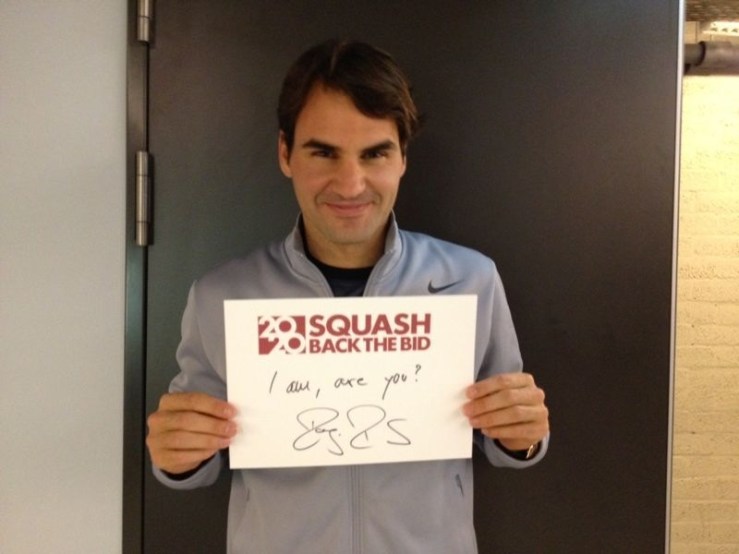
Despite this disappointment, the World Squash Federation and its governing bodies have refused to give up their endeavour, gaining the support from athletes such as Roger Federer, Andy Murray and England number one squash player Nick Matthews to get squash in the olympics.

Even with the support of elite sportsmen, there are a few reasons, though not concrete, behind why squash wasn’t accepted. These include; Squash being “Late to the party” meaning the World Squash Federation didn’t apply for inclusion in the Olympics till 2005, the reason behind that being the WSF deemed the sport unready to compete in the event.  Another reason is that squash was purported not be television friendly, as the ball couldn’t be easily distinguished and the games in general were troublesome to film.

Taking these factors into consideration, the Professional Squash Association invested in ‘Squash TV’ which included higher quality cameras which then, in turn, allowed the ball to be more easily seen. As well as this, the courts are now better lit which also adds to the ease of viewing.

Despite the changes made to the coverage of the matches, the only hope squash now has regarding Olympic inclusion rests on the bid for the 2024 Olympics, which the campaign for is already underway. Though squash participants, professional players and governing bodies are upset regarding the decision, most of the people in these groups have taken the decision with a pinch of salt but will now have to wait for the 2024 Olympics decision and hope that such a distinguished and worldwide sport is finally included.

Andrew Shelley, Chief executive of the World Squash Federation says the sport will continue to grow regardless if it’s included in the olympics or not. Whilst this may be true, the fact remains that if squash isn’t included, it wouldn’t be getting the coverage it needs, as squash participation has been falling over the years, and that it will be losing market territory to other sports.
fedz

Mixed Gender Squash Matches Announced

There have been many debates, articles written and research found regarding the positives and negatives of mixed-gender sports. Whilst these arguments bring up the issue of genetics and hormones which leads to the statements of how men have an advantage over women physically. Though to an extent this is true and more so regarding specific sports such as weightlifting, it doesn’t mean that intergender sports can’t work to a certain degree.

Some sports have already adopted gender mixing, these sports include tennis, where a mixed doubles open was played in 2015 as well as badminton which has also featured mixed doubles in the competition. Other sports that have adopted mixed gender participation is Olympic figure skating and ice dancing which both have the pairs competition, the equestrian competitions also have included teams that include men and women as well as the bobsleigh recently giving their approval to mixed gender teams.

With this information it shows that there is certainly a starting point in place for mixed gender sports to grow. Olympic historian Bill Mallon has commented on the matter and stated that “The barriers are coming down.”

These changes in sports are becoming more common in youth level sports. For example, in the Youth Olympic Games, mixed relays have been included. Also, rugby has included the option at youth level, though backed by a strict set of guidelines which states that participants can only play in mixed gender teams till they’re 12 years old, and cannot then participate when they turn 15. This is due to health and safety reasons, however it’s a good start to get youth players comfortable with being in a mixed gender team, as it will help their teamwork skills and make them more comfortable as they could be in a mixed gender team in the future.

With regards to mixed gender coming to squash, it is a huge move that many players, coaches, and spectators will be interested to see implemented.

This decision comes after years of feedback not only from players, but coaches, captains and supporters of the sport. With this feedback, England Squash have announced that girls aged under 19 in all age groups will now be able to compete in inter-county boys’ competitions.  The choice to implement mixed gender matches was also implemented in correlation with England Squash’s new programme that targets the development of a participant’s ability, not their gender.

England Squash also relayed important information to those interested in this matter, stating that the push for girls to be included in the Boys Inter-County competition was due to a couple of reasons, these being; There not being enough boys to complete a team, thus allowing girls to participate would fill that gap.

As well as girls being needed to complete a team, a county having a talented player who are girls can now field them which in turn will allow the county to play their strongest possible team which will include both genders.

Furthermore, England Squash have allowed this to work both ways, so if the male participants wanted to or were needed, they could play in the girls’ tournaments with no issue.squash4

The Manchester Olympic Parade

On October 17th, Manchester welcomed back Olympic heroes who were returning from a sunny Rio. However, a typically rainy day was not enough to dampen the spirits of spectators and athletes alike, and they were met with a rapturous reception.

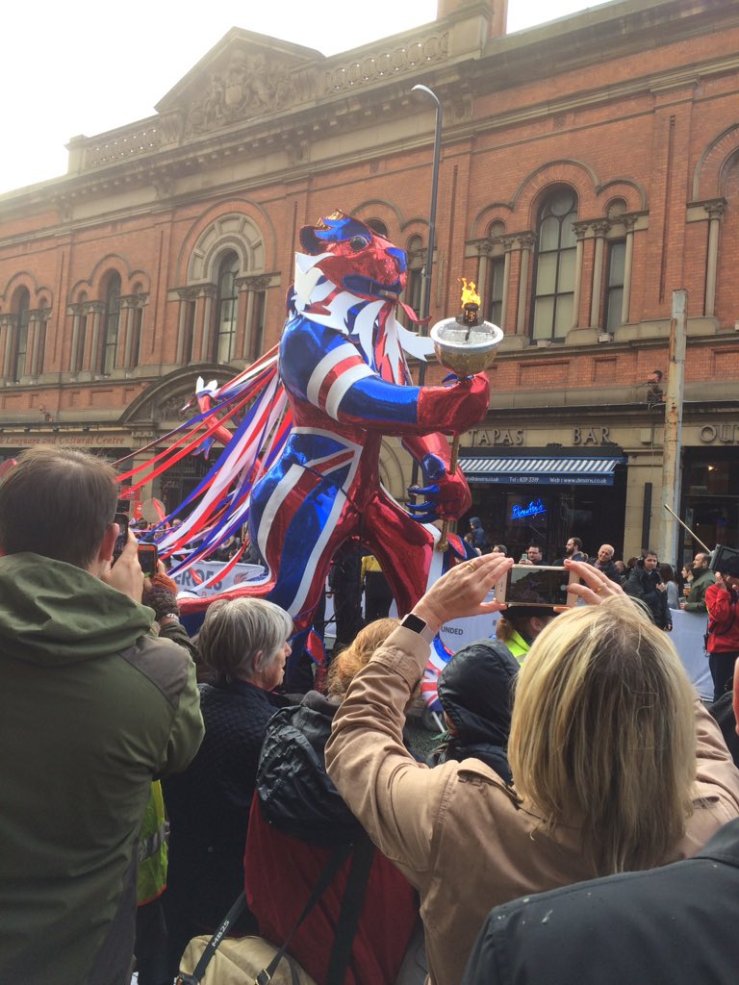
The event itself was a spectacular show, complete with a huge model lion and pyrotechnics, which would have been useful to warm up against the bitter weather.

All of the athletes that went to Rio were paraded around the city centre in a total of 14 floats carrying the athletes, who were in high spirits wearing almost permanent smiles.

The athletes, who participated in both the paralympics and olympics, were there from a whole plethora of different sports, which includes; hockey, gymnastics, taekwondo, golf, rowing, sailing, badminton, shooting amongst others which include the ‘bigger’ name sports such as cycling, boxing and diving amongst many more.

Fans of Bradley Wiggins would have been disappointed however, as he did not appear at the parade. Though he hasn’t attended an event like this since 2004, many thought that the most decorated Olympian would have been there, though being at the center of such a serious controversy such as the use of Therapeutic Use Exemption forms, that could potentially put his titles in jeopardy, would have put a dark cloud over the celebrations.

I managed to get an interview from an elderly couple (as we took shelter under a shop’s awning), who attended the Manchester Olympic parade. When I asked them where they were from they stated that “This is the first Olympic parade we’ve attended. We travelled from Brighton to see today’s events.

The couple I interviewed, (Joanne and Carl) said to me that “It’s a fantastic thing to experience, [the parade], we had watched as much of the Olympics as we could and have been huge fans for years. To be here and see these athletes up close is a real treat. The turnout of people makes you feel a bit proud”.

I also asked them what their favourite sport to watch was, in which Carl answered Tennis and Joanne went for Hockey, with her playing a lot in her ‘younger days,’ as she put to me.

With BBC reporting that over 150,000 thousand people lined the streets to welcome and show their support for olympians, it was great to see such a sense of community and pride all in one place not only from the locals, but also people who had travelled to Manchester.

I also managed to speak to two Manchester Metropolitan students who were also covering the event, who said they would have been at the parade regardless to see the events, they also said that “This is an experience many would love to have, and luckily we’ve got it on our doorstep.”

It’s worth mentioning that Londoners will also have their own parade, so those that couldn’t make it to Manchester had another chance to see their favourite athletes and show their support there.

Many, if not all the athletes that were on the parade will be enjoying their rest, though certainly with one eye on getting back to training ready for the 2020 Summer Olympics which is being held in Tokyo.

4v-yruza-jpg-large

Decline In Squash Participation

It has been reported by various sources, such as The Telegraph, BBC and many websites dedicated to bringing squash news to the public, that in recent years the amount of participants playing squash has dropped considerably.

Data has been gathered regarding this matter, as The Telegraph (2016) state, “Participation in the sport in England has fallen to 196,500 weekly players from 290,000 in 2010.” This includes the influx in participation between 2008-2013 which was aided by England Squash who put a focus on increasing the participation of girls, women, and ethnic minority players.

This decline then raises the question of what will be done to increase the participation? Since last year, the number of participants has increased slightly, going from 325,000 monthly players to 342,300. Though this is not a massive increase, it shows that England Squash, amongst other governing bodies, are going in the right direction to increase how many people play squash in England.

Though organisations still have a large task to get squash participation back to what it was previously, the primary ways England Squash are promoting participation is through advertising the advantages of playing squash, such as the health benefits, as it was crowned by Forbes (2015) as being the healthiest sport in the world, excelling over the likes of rowing, rock climbing, swimming, cycling and a plethora of different sports. The factors that were taken into consideration when deciding this were how many calories the sport burned, the cardio and muscle endurance and injury risk, which when the ratings all added up, put squash just ahead of rowing.

Another strategy that England Squash have implemented is the ‘game changer’ which has cemented their partnership with Places for People Leisure, who, as a National Governing Body, run over 100 courts across England. ‘Game changer’ is a long term strategy which England Squash hope to see increase participation on public squash courts and which will focus on socialising, having a good time and learning the game itself. There is a cost however, the 6-week blocks that will run will cost around £10, though participants who choose to pay will have the possibility of winning vouchers or their own Squash Racquets.

It’s also worth mentioning that England Squash have participation managers, who focus on different parts of the country, some working primarily in the North and some in the South of England. One of these managers also focuses on another England Squash strategy called ‘Squash Girls Can’ which focuses on getting girls more involved in the game of squash through socialising and learning about the game through sessions which cater to both beginners and people who haven’t played in a while.

In conclusion, England Squash have taken into consideration the decrease in participation, and have acted upon it with implementing new strategies and working with different communities, schools and leisure centres to increase how many people play squash, including both adults and children.

squash2

British Junior Championships 2016

This four day event saw over 300 juniors attempting to reach the finals and be crowned the British Junior Champion.

The Boys U-19 winner, Kyle Finch, came away from the tournament winning the Don Sanderson Trophy in comfortable fashion winning three games to nil.

He was available to give a short interview at the end of the day, where he said “I’m thrilled to win the Don Sanderson trophy. I think I played really well.” He then went on to praise his opponent (Stuart MacGregor) Saying “He’s done really well to get to the final.”

The class on show, from all age groups and genders, was astounding to watch. Many, if not all of these athletes have trained since they could hold a racquet, and their talent shone through, with so many close games and worthy winners.

As England Squash (2016) stated on their website, “This event is one of the biggest domestic junior tournaments on the British circuit.”

The Girls U-19 winner was top seed Lucy Turmel, who won a close game three sets to two… a close call which could have lead to a possible upset.

The Boys U-17 category was won by top seed Nick Wall. In a short interview at the end of his match against Jared Carter, where he justified his trophy by winning his match three-nil comfortably.

During the brief Interview with Nick, he said “It feels great to win. I was happy with all of my performances, especially in the final.” He also looked forward to next year’s tournament, and to getting back to training hard and being part of the event.

Elise Lazarus took the girls U-17 trophy and her fifth British Junior Championship title after a comfortable win against Alice Green, where she took the game three-one, after ending the possibility of a comeback at one-one.

In the Boys Under 15 category, Max Forster edged a win against Adam Goad. Forster had to come from one set down to win the game, and did just that to clinch the BJC title.

Top seeds Katie Maliff and Margot Prow provided a great match for spectators, as 5 extremely close fought sets reflected, with Maliff edging the win against their opponent.

The final two categories of the tournament were the boys and girls under 13’s. This is where Sam Osborne-Wylde won the Boys U-13 trophy in his game against Jonah Bryant, displaying an air of confidence and winning the game 3-1. Regarding the Girls U-13 category, Torrie Malik went from last year’s runner up to British Junior Championship winner as she bested opponent Emma Bartley in a resounding 3-0 win.

With Kyle Finch’s win bring an end to the event, all were awarded their trophies at the ending ceremony which was met with beaming smiles. Next year’s British Junior Championships will take place in Sheffield, where many players will look to either retain or add a trophy to their repertoire.

squash